In today's industries, speed of production, reduction of unwanted stoppages, increase of equipment life and maintenance of product quality are among the most important success factors of production lines. With the expansion of industrial automation, many production processes are carried out using conveyor belts, rollers, wheels, rollers and material transfer equipment. In such a situation, the quality of parts that are constantly in contact with raw materials and products has a direct impact on the performance of the entire production line.
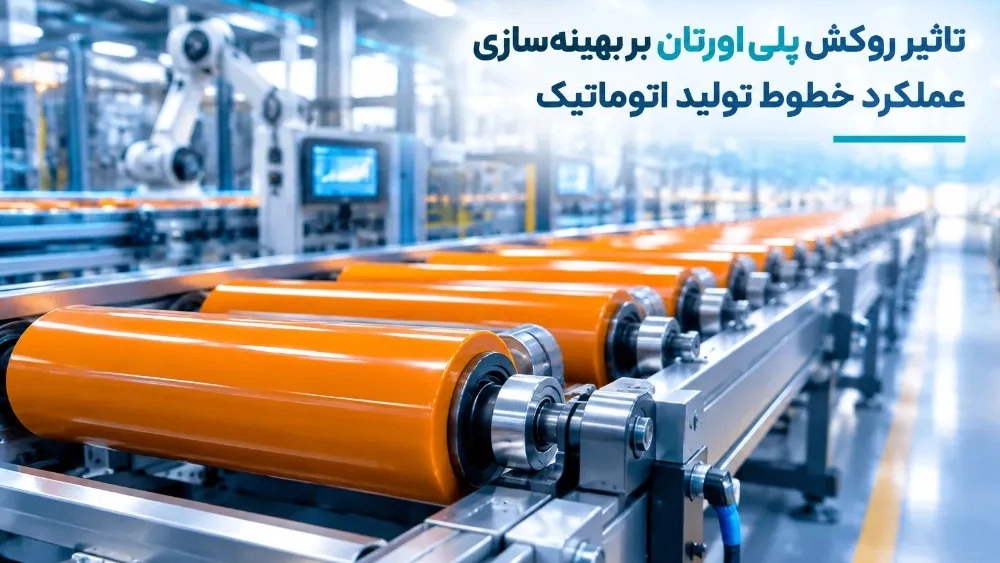
One of the practical solutions to increase the durability of this equipment is to use polyurethane coating. This coating is used in different parts of production lines due to its good resistance to wear, impact, pressure and many environmental factors. Especially in equipment such as industrial rollers, rollers, wheels and transmission systems, the correct use of polyurethane coating can help reduce wear and increase the lifespan of parts.
In this article, we examine how polyurethane coating can improve the performance of automatic production lines, what advantages it has, and what points should be considered when choosing it. Also, at the end, we discuss the role of Aria Sanat Isfahan in providing solutions related to industrial equipment and parts.
What is polyurethane coating?
Polyurethane or Polyurethane is one of the engineering polymer materials that is widely used in various industries due to its ability to adjust mechanical and chemical properties. Depending on the type of formulation and production conditions, polyurethane can be produced with different characteristics such as hardness, flexibility, wear resistance and mechanical resistance.
Polyurethane coating is layered on the surface of metal parts or other suitable substrates in many industrial applications. The purpose of this work is to create a more resistant surface suitable for the working conditions of the machine.
For example, a metal roller that is in direct contact with the product or belt may wear out due to constant friction. The use of polyurethane coating can modify the contact surface and provide the mechanical properties required for that application.
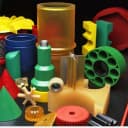
In various industries, polyurethane coatings are used for rollers, rollers, wheels, pulleys, material transfer equipment and some special parts of automatic lines. Industrial sources have also introduced wear resistance and the possibility of producing polyurethane parts with customized specifications as important features of this material.
Why do automatic production lines need polyurethane coating?
Automatic production lines usually operate without stops or with very limited stops. Therefore, the failure of a small part may stop a part of the line or even the entire production process.
In this situation, polyurethane coating can play a protective role in parts that are subject to friction, pressure, impact or continuous contact. Of course, its effect depends on the type of polyurethane, the design of the part, the thickness of the coating, the working conditions and the quality of the coating.
The correct use of polyurethane coating can serve several important purposes:
- Decreasing wear of the surface of parts
- Increasing the useful life of some mechanical components
- Improving friction and surface adhesion
- Reducing damage to the product in the transfer process
- Reducing the frequency of replacing some parts
- Helping to reduce stoppages due to wear and tear of parts
- Possibility of producing a surface with a hardness suitable for the application
For this reason, choosing an appropriate coating should be part of the production line engineering process, not just a decision to repair or replace the part.
The effect of polyurethane coating on reducing equipment depreciation
One of the most important advantages of using polyurethane coating in industrial equipment is to help combat wear. In production lines, many parts come into contact with other parts or raw materials thousands of times during the day. This continuous contact can cause a gradual reduction in dimensions, change in surface shape, and a drop in performance of the part.
When a suitable surface is covered with a polyurethane coating, the surface properties of the part can be adjusted according to the working conditions. As a result, the part can perform properly against mechanical erosion.
For example, in a material conveying system, rollers may be in continuous contact with belts or products. Choosing the right coating for these rollers can help maintain their surface quality and stable performance.
Increasing the productivity of production lines with polyurethane coating
One of the purposes of using polyurethane coating is to increase the reliability of some consumable parts and reduce their wear and tear. As the frequency of repairing or replacing parts decreases, the possibility of better planning for repairs will also increase.
For a factory, production line stoppage can create costs such as:
- Reduction of production capacity
- Increase of manpower cost
- Increase of repair time
- Disruption of order delivery schedule
- Increase of cost of spare parts
- Reduction of productivity of machinery
Therefore, the engineered use of polyurethane coating can be part of the maintenance strategy and increase the reliability of the equipment.
Application of polyurethane coating in industrial rollers
Rollers are one of the important components of many production lines. These parts may perform tasks such as conveying, guiding, compressing, stretching or controlling the movement of the product.
In such applications, polyurethane coating can be applied on the surface of the roller according to the needs of the production line. The characteristics of the coating surface must be in harmony with conditions such as rotation speed, product weight, pressure level, ambient temperature and the type of material in contact.
The role of polyurethane coating in material transfer systems
The surface of the parts that are in contact with the belt or the product can affect the quality of the transmission. Using polyurethane coating in some of these parts can help create controlled friction and reduce slippage.
This issue is very important in lines where product position accuracy is important. If the transfer roller or wheel is too slippery, the product may shift or change its position. On the other hand, excessive friction can also increase energy consumption and wear.
Therefore, the choice of polyurethane coating should be based on the balance between friction, hardness and working conditions.
Resistance to environmental factors
Production lines do not always operate in ideal conditions. The presence of oil, moisture, dust, chemicals, temperature changes or mechanical load can affect the performance of parts.
One of the advantages of polyurethane is the possibility of designing and choosing different grades for different application conditions. For this reason, when choosing polyurethane coating, the actual working environment of the device should be checked.
For example, a coating used in a food packaging line may require different specifications than a coating used in a heavy industrial environment.
Also, a difference should be made between "material resistance" and "material suitability for a specific application". No single type of coating is the best option for all industrial conditions, and the final choice should be made based on the technical specifications of the part.
Effect of polyurethane coating on product quality
In many production lines, transmission parts are not only responsible for moving the product; They are also directly in contact with the surface of the product.
If the surface of a roller is damaged or worn, it may cause streaking, improper pressure, slippage or deformation of the product. In such a situation, the correct use of polyurethane coating can help create a uniform and controlled surface.
This issue becomes more important in industries where the appearance of the product is very important. As a result, polyurethane coating can help to maintain the quality of the production process in addition to protecting the equipment.
Choosing the right hardness of polyurethane coating
One of the most important steps in designing an industrial coating is choosing the right hardness. The choice of hardness is not made solely on the basis of higher resistance.
If the coating is too hard, it may cause poor contact with the product in some applications. If it is too soft, there is a possibility of deformation or faster wear.
The factors that should be considered in choosing the hardness of polyurethane coating are:
- Weight and pressure applied to the part
- Movement speed or rotation
- Abrasion rate
- Type of opposite surface
- Ambient temperature
- Presence of oil or chemicals
- Required degree of flexibility
- Type of product in contact with the coating
For this reason, providing the exact specifications of the device to the coating manufacturer or contractor can help to choose the right option.
Polyurethane coating and reducing maintenance costs
The real cost of an industrial part is not only its purchase price. The cost of installation, repair, stopping the device, manpower and periodic replacements should also be considered.
If a part gets a longer working life using polyurethane coating, the interval between repairs and replacements may be increased. As a result, direct and indirect maintenance costs can also be reduced.
Of course, this issue should be measured by the actual performance of the part in the production line. For economic evaluation, it is better to compare the initial cost of the coating, expected life, installation time, repair frequency and the cost of stopping the line.
The importance of the precise implementation of polyurethane coating
The final quality does not depend only on the polyurethane material itself. Surface preparation, proper connection to the part, coating thickness, final machining and dimensional control also play an important role.
Even if the raw material is of good quality, improper execution can cause separation, cracking, non-uniformity or reduction of coating life.
Therefore, when ordering polyurethane coating, it is better to provide the complete specifications of the part, including diameter, length, speed, load, working temperature, and type of contact, to the contractor.
Why choosing Aria Sanat Isfahan can be important for industries?
For industries, the selection of suppliers of industrial parts and services is not based on price alone. Knowing the application, the possibility of providing a suitable solution for the equipment and paying attention to the technical specifications are important factors in choosing a supplier.
Aria Sanat Isfahan can be considered in this context as an option to check and meet the industrial needs of the collections. When ordering polyurethane coating, it is suggested to check the technical specifications of the part and the actual working conditions completely so that the proposed solution fits the needs of the production line.
The most important information that should be provided to Aria Sanat Isfahan before placing an order includes the following:
- Part dimensions
- Diameter and length of roller or wheel
- Type of machine
- Speed of rotation or movement
- Load amount
- Type of product in contact with coating
- Ambient temperature
- Presence of oil, water or chemicals
- Expected amount of wear
- Required hardness of coating
This information helps to choose more accurately the type of polyurethane coating and its technical specifications.
What industries use polyurethane coating?
Using polyurethane coating is not limited to a specific industry. Due to the ability to produce polyurethane in different hardnesses and specifications, this material is used in a wide range of industrial applications.
Some areas that can be investigated are:
Packaging industries
In packaging lines, rollers and transfer systems must be able to move products at the right speed and with minimal damage. In these applications, choosing the right surface for transmission parts is very important.
Printing industry
In printing equipment, the uniformity of the roller surface and the control of contact with the product are particularly important. Polyurethane coating can be considered for some applications in this area.
Textile industry
Rollers and transmission parts in textile lines are in continuous contact and movement. Choosing the right coating can help increase the durability and performance of this equipment.
Food industry
In this industry, in addition to mechanical durability, health requirements and compatibility of materials with the production process should also be considered. Therefore, choosing the right grade of polyurethane coating is particularly important.
Material handling industries
In conveyor and transmission systems, wheels, rollers, and rollers are important components, and a suitable coating can play a role in controlling friction and reducing wear.
How to choose the best polyurethane coating?
To make the right choice, it is better to make a step-by-step decision-making process:
The first step: knowing the application
First determine in which part of the production line the part is used and what is its function.
The second step: checking the working conditions
Specify the speed, pressure, temperature, amount of wear and environmental factors.
Third step: determination of coating specifications
based on working conditions, hardness and other required characteristics.
Fourth step: Checking the dimensions
Diameter, length, thickness and required tolerances must be known.
Fifth stage: choosing a suitable contractor
In this stage, the specifications can be discussed with a group such as Aria Sanat Isfahan so that the possibility of implementing a solution suitable for the needs of the line can be checked.
summary; Polyurethane coating and the future of automatic production lines
Increasing the productivity of automatic production lines depends on a set of factors and it cannot be limited only to the speed of the machines. The quality of mechanical parts, reliability of equipment, reduction of stoppages and proper planning of repairs are all effective in the final performance of the line.
Meanwhile, polyurethane coating can be an engineering solution for many parts that are exposed to wear, pressure, friction and continuous contact. The correct use of this coating in rollers, wheels, rollers and some transmission equipment can help to increase the durability of the part, maintain the quality of the surface and reduce the frequency of repairs.
However, the desired result is achieved when the type of polyurethane coating is selected based on the actual conditions of the production line. Hardness, thickness, dimensions, environmental conditions, speed and load should all be checked before applying the coating.
If your collection seeks to increase the durability of parts and optimize the performance of production line equipment, you can discuss the technical specifications of the desired parts with Aria Sanat Isfahan and get advice on the possibility of using polyurethane coating and the appropriate solution for your application.
Finally, the right coating is not just a protective layer on the part; Rather, it can be part of an engineering approach to increase reliability, reduce depreciation and optimize the performance of automatic production lines.
Polyurethane coating is used in parts of production lines where parts are constantly exposed to friction, pressure and contact with products. Using it correctly can help to reduce the depreciation of parts, increase the working life and reduce the frequency of repairs.
In many applications, yes. The proper wear resistance of polyurethane can increase the durability of the roller surface. Of course, the actual life of the coating depends on factors such as hardness, thickness, speed, pressure, temperature and environmental conditions.
The appropriate hardness depends on factors such as the amount of load, speed of movement, pressure, type of counter surface, amount of wear and type of product in contact. Therefore, it is better to check the technical specifications of the part and its working conditions before ordering.